 Chatbot
 Single Gene Queries
 Gene Set Queries
 Bulk Studies
 Single Cell Studies
 Hypotheses
 Resources
 Contribute
 Downloads
 About
About
 Help
Help
 Gene counts are sourced from ARCHS4, which provides uniform alignment of GEO samples.
You can learn more about ARCHS4 and its pipeline here.
Gene counts are sourced from ARCHS4, which provides uniform alignment of GEO samples.
You can learn more about ARCHS4 and its pipeline here.
Select conditions below to toggle them from the plot:
| GROUP | CONDITION | SAMPLES |
|---|---|---|
| C57BL/6J mice |
GSM4502619 GSM4502620 GSM4502621
|
|
|
GSM4502682 GSM4502683 GSM4502684
|
||
|
GSM4502667 GSM4502668 GSM4502669
|
||
|
GSM4502679 GSM4502680 GSM4502681
|
||
|
GSM4502646 GSM4502647 GSM4502648
|
||
|
GSM4502697 GSM4502698 GSM4502699
|
||
|
GSM4502742 GSM4502743 GSM4502744
|
||
|
GSM4502721 GSM4502722 GSM4502723
|
||
|
GSM4502595 GSM4502596 GSM4502597
|
||
|
GSM4502724 GSM4502725 GSM4502726
|
||
|
GSM4502709 GSM4502710 GSM4502711
|
||
|
GSM4502628 GSM4502629 GSM4502630
|
||
|
GSM4502604 GSM4502605 GSM4502606
|
||
|
GSM4502670 GSM4502671 GSM4502672
|
||
|
GSM4502655 GSM4502656 GSM4502657
|
||
|
GSM4502676 GSM4502677 GSM4502678
|
||
|
GSM4502685 GSM4502686 GSM4502687
|
||
|
GSM4502751 GSM4502752 GSM4502753
|
||
|
GSM4502601 GSM4502602 GSM4502603
|
||
|
GSM4502631 GSM4502632 GSM4502633
|
||
|
GSM4502691 GSM4502692 GSM4502693
|
||
|
GSM4502658 GSM4502659 GSM4502660
|
||
|
GSM4502730 GSM4502731 GSM4502732
|
||
|
GSM4502637 GSM4502638 GSM4502639
|
||
|
GSM4502748 GSM4502749 GSM4502750
|
||
|
GSM4502613 GSM4502614 GSM4502615
|
||
|
GSM4502643 GSM4502644 GSM4502645
|
||
|
GSM4502652 GSM4502654
|
||
|
GSM4502610 GSM4502611 GSM4502612
|
||
|
GSM4502592 GSM4502593 GSM4502594
|
||
|
GSM4502739 GSM4502740 GSM4502741
|
||
|
GSM4502634 GSM4502635 GSM4502636
|
||
|
GSM4502673 GSM4502674 GSM4502675
|
||
|
GSM4502616 GSM4502617 GSM4502618
|
||
|
GSM4502661 GSM4502662 GSM4502663
|
||
|
GSM4502649 GSM4502650 GSM4502651
|
||
|
GSM4502727 GSM4502728 GSM4502729
|
||
|
GSM4502700 GSM4502701 GSM4502702
|
||
|
GSM4502745 GSM4502746 GSM4502747
|
||
|
GSM4502607 GSM4502608 GSM4502609
|
||
|
GSM4502703 GSM4502704 GSM4502705
|
||
|
GSM4502706 GSM4502707 GSM4502708
|
||
|
GSM4502718 GSM4502719 GSM4502720
|
||
|
GSM4502712 GSM4502713 GSM4502714
|
||
|
GSM4502625 GSM4502626 GSM4502627
|
||
|
GSM4502640 GSM4502641 GSM4502642
|
||
|
GSM4502736 GSM4502737 GSM4502738
|
||
|
GSM4502715 GSM4502716 GSM4502717
|
||
|
GSM4502664 GSM4502665 GSM4502666
|
||
|
GSM4502622 GSM4502623 GSM4502624
|
||
|
GSM4502694 GSM4502695 GSM4502696
|
||
|
GSM4502733 GSM4502734 GSM4502735
|
||
|
GSM4502688 GSM4502689 GSM4502690
|
||
|
GSM4502598 GSM4502599 GSM4502600
|
||
| C57BL/6J micea |
GSM4502653
|
Submission Date: Apr 27, 2020
Summary: To investigate the global gene expression dynamics associated with short-term fasting, we used mRNA-seq to profile the transcriptomes of nine organs obtained from mice subjected to six different STF duration (0, 2, 8, 12, 18 and 22 hours of fasting; n=3 per time point; Fig. 1a). The nine organs profiled were: olfactory bulb (OB), brain (BRN, which includes the telencephalon and diencephalon), cerebellum (CBL), brainstem (BST, which consists of the mesencephalon, pons, and myelencephalon), stomach (STM), liver (LIV), interscapular brown adipose tissue (iBAT), perigonadal white adipose tissue (pgWAT), and posterior-subcutaneous white adipose tissue (psWAT).
GEO Accession ID: GSE149468
PMID: 32526449
Submission Date: Apr 27, 2020
Summary: To investigate the global gene expression dynamics associated with short-term fasting, we used mRNA-seq to profile the transcriptomes of nine organs obtained from mice subjected to six different STF duration (0, 2, 8, 12, 18 and 22 hours of fasting; n=3 per time point; Fig. 1a). The nine organs profiled were: olfactory bulb (OB), brain (BRN, which includes the telencephalon and diencephalon), cerebellum (CBL), brainstem (BST, which consists of the mesencephalon, pons, and myelencephalon), stomach (STM), liver (LIV), interscapular brown adipose tissue (iBAT), perigonadal white adipose tissue (pgWAT), and posterior-subcutaneous white adipose tissue (psWAT).
GEO Accession ID: GSE149468
PMID: 32526449
Visualize Samples
Visualizations are precomputed using the Python package scanpy on the top 5000 most variable genes.
Precomputed Differential Gene Expression
Differential expression signatures are automatically computed using the limma R package.
More options for differential expression are available to compute below.
Signatures:
Select conditions:
Control Condition
Perturbation Condition
Only conditions with at least 1 replicate are available to select
Differential expression signatures can be computed using DESeq2 or characteristic direction.
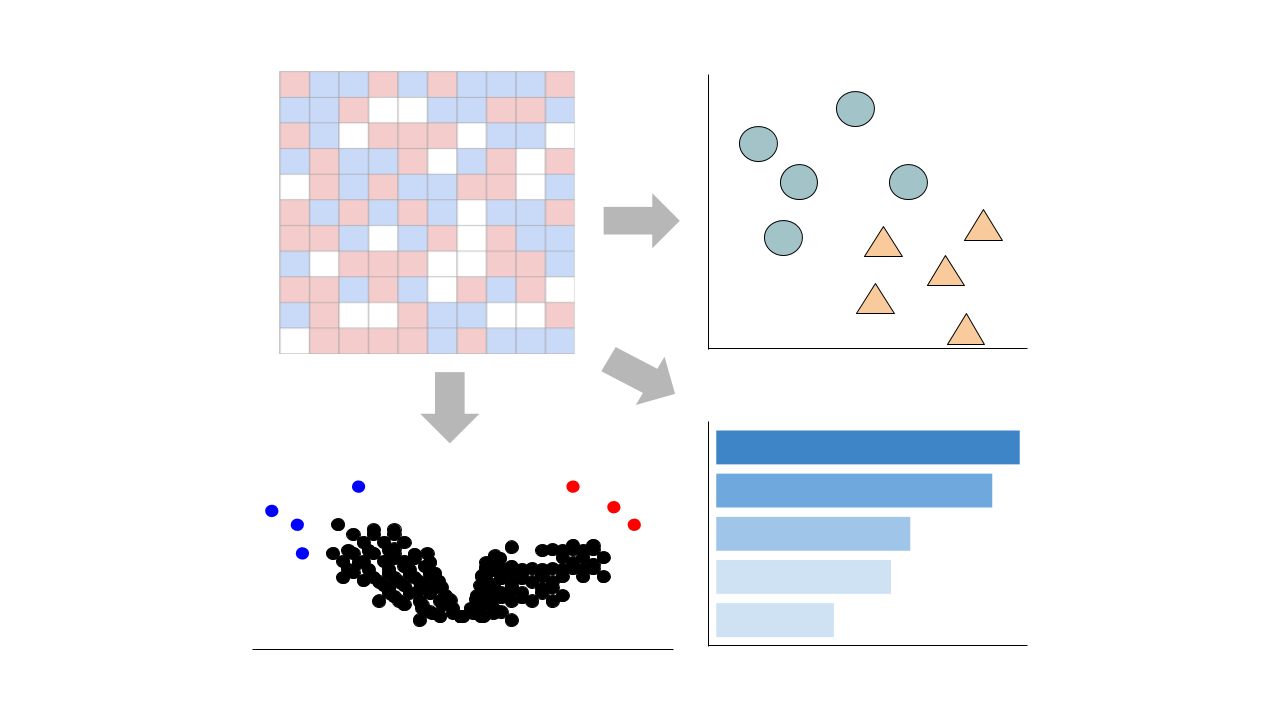
This pipeline enables you to analyze and visualize your bulk RNA sequencing datasets with an array of downstream analysis and visualization tools. The pipeline includes: PCA analysis, Clustergrammer interactive heatmap, library size analysis, differential gene expression analysis, enrichment analysis, and L1000 small molecule search.